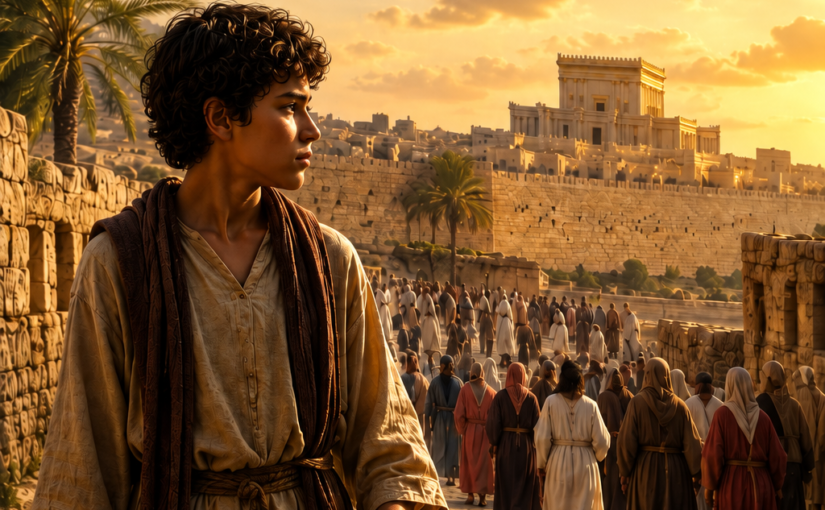
Author Heather Grannum shares her favorite character from the Biblical historical novel “Where is Matthias?“
Nathan arrives in Jerusalem in time for the annual Passover celebration and looks forward to spending it with his childhood friend Yaron, whose sister, Abigail he is hoping to marry, except that difficult family finances have diminished the dowry he is able to offer.
As the city of Jerusalem welcomes its worldwide visitors, Nathan finds out that his sister, Eliza, and her husband, who are also guests, are excited about the strange rabbi who rode into Jerusalem on a donkey. Could he be the Messiah?
Their outspoken belief causes some discomfort in the home, especially when there is another distinguished guest who denounces Jesus and whose son happens to have all the necessary attributes as the perfect choice for Abigail.
As Jerusalem turns against Jesus, and amidst complicated family relationships which bring tragedy, it is Nathan who, in the face of his own suffering, provides a steadying hand.
Nathan is a balanced young man, well respected by the family who have invited his family for Passover. Matthias likes him because he chats with him like a fellow adult, unlike Yaron, who teases him.
Yaron is very outspoken about the state of affairs in Jerusalem, and his condemnation of the corruption he sees in the authorities tends to upset those around him, especially in the family. Nathan is the one who keeps him in check.
He is down to earth and accepts that his diminished financial resources might place him out of the running as a suitable husband for Abigail. Yet he is able to retain his composure in an uncomfortable situation. He can also play the flute.
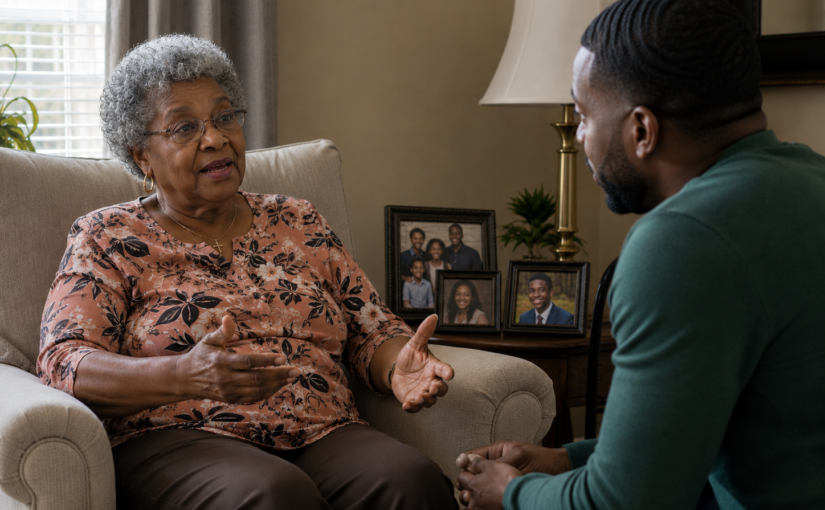
There are some things grandparents can give their grandchildren that cannot be bought in a store: A favorite family recipe. A story about what life was like when they were young. An old photograph tucked away in a drawer. A familiar laugh. A hug that somehow makes everything seem a little more manageable.
And, for Christian grandparents, there may be something even more valuable: a faith that has been lived out over a lifetime.
National Grandparents Day gives us an opportunity to stop and appreciate these gifts.
In the United States, Grandparents Day is observed each year on the first Sunday after Labor Day. In 2026, it falls on September 13. Although the holiday is a relatively modern one, the idea behind it is timeless. Families have always passed their stories, traditions, values, and beliefs from one generation to the next.
For Christians, that passing of faith is especially meaningful.
A Faith Worth Passing On
The Bible speaks often about the importance of one generation telling the next about God’s faithfulness.
Psalm 78 reminds us of our responsibility to tell the coming generation “the praises of the LORD, and his strength, and his wonderful works that he hath done.” The purpose was not simply to preserve history. It was to help children understand who God is and to encourage them to place their own trust in Him. Grandparents have a unique place in that process.
They have lived long enough to have seen both difficult seasons and joyful ones. They have experienced answered prayers and unanswered questions. They have made mistakes, learned lessons, endured losses, celebrated victories, and watched the world change in ways they could never have imagined when they were young.
That experience can give their testimony a special depth.
A grandparent doesn’t have to preach a sermon to pass on faith. Sometimes it happens in the simplest ways.
It may be a grandmother who quietly prays before a family meal. A grandfather who keeps his Bible beside his chair. A grandmother who tells a grandchild, “We’ve been through hard times before, and God has always been faithful.” Or a grandfather who takes the time to explain why a particular Bible verse has meant so much to him over the years.
Those moments may seem small at the time.
Years later, they may not seem small at all.
More Than Family History
One of the great gifts grandparents can offer is a connection to the past.
Children naturally live in the present. Their world revolves around school, friends, activities, technology, and whatever happens to be occupying their attention that day. Grandparents can help them see that their lives are part of a much larger story.
They can tell them what their parents were like as children. They can explain where the family came from. They can share stories about relatives the younger generation never had the opportunity to meet.
And they can tell stories about God’s work in their own lives.
Perhaps there was a time when the family didn’t know how a financial difficulty would be resolved. Perhaps there was a season of illness, grief, uncertainty, or change. Perhaps there was a decision that seemed insignificant at the time but eventually changed the direction of an entire family.
These stories matter.
They remind children that faith isn’t simply something they read about in church or in a children’s Bible. It is something that can be lived.
The Gift of Time
Grandparents Day also reminds us of something that is easy to overlook: time is a gift.
The older we become, the more aware we are that family gatherings we assumed would happen again may not. There will come a last Thanksgiving dinner, a last Christmas together, a last family photograph, and a last conversation.
We rarely know which one is the last.
That is why Grandparents Day can be more than a card, a phone call, or a bouquet of flowers. It can be an invitation to slow down and spend some time together.
Sit with a grandparent.
Ask questions.
Listen to the stories you’ve heard before.
And, perhaps most importantly, ask about the things you’ve never thought to ask.
What was your childhood like? What did you believe when you were my age? Who influenced your faith? What was the hardest time of your life? What did God teach you through it? Is there anything you wish you had done differently?
Those conversations can become a priceless part of a family’s heritage.
I regret not having those opportunities when my grandparents were alive. My grandparents were born and live most of their lives in Prince Edward County, Virginia, while I was born in Washington, D.C., so I didn’t see them much. But I have now inherited the land on which the house they grew up in still stands. It is vacant and dilapidated, but it stands as a monument to my grandparents and their hard work and faith in raising our family. And every time I walk this land, I have so many questions that I wished I had the presence of mind to ask them back then.
I wish I had appreciated them more.
Author’s grandparents family home in Prince Edward County, Virginia
A Legacy That Goes Beyond Possessions
We often think of a legacy in terms of what someone leaves behind financially. But a Christian legacy is about much more than possessions.
It is about character.
It is about faithfulness.
It is about the example a person leaves in the lives of others.
A grandparent who consistently demonstrates kindness, humility, forgiveness, generosity, and trust in God may be leaving a far more valuable inheritance than anything contained in a bank account.
Proverbs 13:22 tells us that “a good man leaveth an inheritance to his children’s children.” While that verse can certainly include material provision, there is also something deeply fitting about thinking of an inheritance as everything of lasting value that one generation places into the hands of another.
For Christian grandparents, perhaps the greatest question isn’t simply, “What will I leave my grandchildren?”
It is, “What will they remember about my faith?”
An Opportunity for Every Generation
Grandparents Day isn’t only for grandparents.
It is also for children and grandchildren.
It gives younger family members a chance to say something that can sometimes go unsaid: Thank you.
Thank you for the stories.
Thank you for the prayers.
Thank you for the sacrifices.
Thank you for the lessons.
Thank you for showing us what it looks like to keep going when life becomes difficult.
And thank you for pointing us toward a God who is faithful from generation to generation.
At Dove Christian Publishers, we believe books can play a small but meaningful role in that process. A good book can open a conversation between a grandparent and grandchild, preserve a story, encourage a struggling family, or simply provide an opportunity for two generations to sit together and share something meaningful.
Perhaps that is one of the reasons stories matter so much.
They help us remember where we came from.
They help us understand who we are.
And sometimes, they help us see where we are going.
This Grandparents Day, take a little time to celebrate the grandparents in your life. If they are alive, call them. Visit them. Give them a card. Sit down and listen to them.
And if you’re a grandparent yourself, remember that you don’t have to do something extraordinary to leave a lasting legacy.
Sometimes the greatest legacy is simply a life faithfully lived—and a story worth passing on.
Every book has a story behind it. For me, Walking in the Spirit: A 90-Day Journey to a Spirit-Led Life grew out of my desire to encourage believers, edify the Church, and, above all, glorify God.
As a pastor and student of God’s Word, I became convinced over time that one of the Church’s greatest needs today is not more information about God, but a deeper relationship with Him through the Holy Spirit. We can study the Scriptures, attend church services, listen to sermons online, and participate in Christian ministries, yet still fail to experience the Spirit-led life God desires for us.
The Apostle Paul gives us a simple command in Galatians 5:16: “Let the Holy Spirit guide your lives. Then you won’t be doing what your sinful nature craves” (NLT). Paul’s words are not just good advice; they describe a way of life—a life where we are called to walk in the Spirit daily.
Every morning presents us with a choice: Will I walk according to my own fleshly desires, or allow the Holy Spirit to guide and direct my thoughts, attitudes, words, and actions?
Paul describes the conflict we experience in Galatians 5:17: “The sinful nature wants to do evil, which is just the opposite of what the Spirit wants” (NLT). Any Christian who has followed Christ for any length of time knows something about this struggle. We want to do what is right, but our flesh often pulls us in a different direction.
The answer to this battle is not trying harder. We must learn to walk closer with the Holy Spirit, and by surrendering our lives to His daily leadership, He will transform us from the inside out.
Transformation is vitally important because anyone can accumulate biblical knowledge without letting it change their life. But when God’s Word is combined with the work of the Holy Spirit, Scripture becomes more than just information—it becomes a means through which God can shape or reshape our character and draw us closer to Christ.
Romans 12:2 reminds us that transformation takes place as our minds are renewed. The Holy Spirit will use the Word of God to challenge our thinking, correct our attitudes, and strengthen our faith. This is my hope for every person who opens this book.
One of the important reasons we need to walk in the Spirit daily is found in Galatians 5:22–23, where Paul describes the fruit the Spirit produces in the life of a believer: love, joy, peace, patience, kindness, goodness, faithfulness, gentleness, and self-control.
The reason Paul calls it fruit is that fruit is evidence of life. You see, an apple tree does not struggle to produce apples by simply trying harder. When a tree is healthy and rooted properly, fruit will naturally appear. Similarly, when believers abide in Christ and walk in the Spirit, His character shows in their lives.
This is important because the goal of the Christian life is not merely to appear religious. It’s becoming more like Christ. That’s why I pray this devotional will help believers examine their lives and ask some important questions: Is the fruit of the Spirit becoming more evident in me? Am I becoming more loving? Am I more patient? More forgiving? More self-controlled? Am I responding to life’s circumstances in the power of the Spirit rather than in the flesh? These questions can be uncomfortable, but they’re necessary.
Another primary purpose of this book is to encourage individual Christians. Many believers love God but feel spiritually tired, discouraged, distracted, or uncertain about their walk with Him. Some may have been Christians for years but have lost the joy and passion they once experienced. Can you relate to this? I surely can because I’ve experienced this many times in my own life.
My prayer is that these 90 days will become an opportunity to slow down, open God’s Word, listen to the Holy Spirit, and over time, rediscover the joy of walking in a vibrant relationship with Jesus.
Each devotional is intended to encourage the reader to take another step—maybe not a giant step, but a faithful one—because one step at a time will eventually lead us to where we need to be.
I also wrote this book to edify the Church. The Church is strong when believers allow the Holy Spirit to work through their lives. Spirit-led believers become encouragers, servants, prayer warriors, peacemakers, witnesses, and faithful disciples.
When believers walk in the Spirit, families become stronger, marriages can be restored like mine was over twenty years ago, relationships can be healed, churches can experience unity, and our communities will see the love of Christ demonstrated in practical ways.
I hope this devotional will not just appeal to individual readers. I pray it will reach families, small groups, Bible studies, and churches, encouraging God’s people to pursue a deeper relationship with the Holy Spirit and with one another.
Above all else, the purpose of this book is to glorify God. Jesus said in John 15:8, “When you produce much fruit, you are my true disciples. This brings great glory to my Father”(NLT).
That verse captures the heart of this devotional and why I wrote it. I did not write Walking in the Spirit so that my name would be remembered. I wrote it hoping God’s name would be glorified. That is why I am redirecting all royalties and proceeds from book sales back into ministry, so I can partner with my readers to reach more people with the soul-saving message of the gospel of Christ.
If one person draws closer to Jesus by the Spirit because of this devotional, if one discouraged believer finds hope, if one church is encouraged to pursue greater spiritual depth, then I will consider this work worthwhile.
My prayer is that every reader who completes these 90 days will be able to say, “I am not the same person I was when I began.”
In conclusion, may we become people who learn to walk in the Spirit. May we surrender our desires, follow His leading, obey His Word, and allow His presence to produce fruit in our lives.
Steve Ranni is a Canadian author, pastor, veteran, and speaker based in Fredericton, New Brunswick. He is the author of the new devotional book, “Walking in the Spirit.” Visit him at SteveRanni.com.
Inspirational encouragement for your unsure moments
“God is in the midst of her; she shall not be moved: God shall help her, and that right early.” – Psalm 46:5
On the day I heard the words “You have breast cancer,” something unexpected happened — I smiled. It wasn’t forced. It wasn’t denial. It wasn’t shock. It was something deeper, something holy, something that didn’t make sense in the natural.
My smile wasn’t rooted in the diagnosis; it was rooted in the presence of God.
When the doctor spoke the words out loud, they seemed to float in the air for a moment, suspended between fear and faith. I remember looking at Danny, squeezing his hand, and feeling a stillness fall over the room. Not fear. Not panic. Just peace — fragile, yet undeniable.
It made no sense. Cancer is supposed to break you. It’s supposed to consume your thoughts, unravel your emotions, and steal your joy. But in that moment, joy rose up inside me like a quiet rebellion against fear.
That smile was more than an expression.
It was a declaration.
A statement.
A spiritual posture.
It was the whisper of my soul saying, “This will not move me.”
In that moment, I knew — not from my strength, but from God’s — that the cancer had not come to destroy me. It had come to reveal God’s glory in a way I had never experienced before.
My husband Danny looked at me, shocked. I think part of him wondered if I understood what the doctor said. But he also saw something shift in me — something strong, something anchored, something supernatural. And that strength wasn’t mine. It was God’s.
That day, my smile became a memorial stone — a moment I would carry with me through every biopsy, every appointment, every sleepless night. A reminder that fear doesn’t get to write my story.
Looking back, I understand why that smile came so naturally: God’s presence carries joy, even in the darkest valleys.
It wasn’t the kind of joy that comes from happiness or circumstances. It was the kind of joy that only comes from knowing who walks beside you. A joy that settles deep into your spirit and says: “Even here, even now, God is with you.”
In the days that followed, that moment in the doctor’s office became a reference point. When fear tried to sneak in, I remembered how God steadied me when I should have been falling apart. When doubt whispered, “What if…?” my spirit remembered, “But God…”
I realized something powerful: Joy isn’t the absence of a hard reality — it’s the presence of God in the middle of it.
My smile wasn’t strength; it was surrender. It was the Holy Spirit rising in me when my flesh didn’t have the ability to stand.
So many times, I returned to that moment, mentally reliving the peace that filled the room. It became evidence that God was not only with me — He was ahead of me, preparing each step.
Not one appointment surprised Him.
Not one biopsy worried Him.
Not one moment overwhelmed Him.
God was already working behind the scenes, aligning the right doctors, the right timing, and the right support system. And every time fear tried to overshadow that truth, God reminded me of the peace He gave me when I heard the diagnosis.
That peace didn’t come from understanding.
It came from trusting.
This is an excerpt from the book, “Faith over Fear: A Healing Journey” by Kimberly Allen, a devotional for women facing breast cancer or other hard battles of life.
The greatest power we will ever display is the ability to walk in the truth of God’s Word, living out the righteous life of His incorruptible seed within us and continually bearing the fruit of holiness. No wonder the Bible says in Romans 1:4:
“And declared to be the Son of God with power according to the Spirit of holiness, by the resurrection from the dead.”
I believe our greatest battle is the battle of living right. Satan and his cohorts know that once the incorruptible seed of God is properly nurtured within us, it increases our capacity to abide in God’s love — the canopy of protection beyond the enemy’s reach.
The enemy bombards us with all manner of vain, unedifying thoughts and negativities, making it seem impossible to live out God’s truth. But beloved of God, He has delivered us from sin and from the power of sin. Sin no longer has dominion over us. God has embedded His grace in His Word to empower us to live righteously, represent Him faithfully here on earth, and return home to Him when our time here is complete.
My dear sisters and brothers, I do not know which aspect of your life you may still be struggling with but know this: God loves you deeply all the same. Yet He hates the sin that seeks to interrupt your communion with Him. He has already given you the power to say “No.” You carry His divine nature and His DNA to resist sin.
“For sin shall not have dominion over you…” — Romans 6:14
Never see yourself as powerless. You have the Holy Spirit — your Helper — living within you to strengthen and sustain you. Ask Him daily for help and grace.
Our Christian journey has no meaning without His power at work within us, and we know that God’s manifest presence makes His power available. Holiness grants us access into all that God is. The Bible says:
“Without holiness no man shall see the Lord.” — Hebrews 12:14
Often, we think holiness is merely about abstaining from fornication or adultery, but holiness is far deeper than that. Holiness is the very nature of God, and Jesus Christ is the perfect epitome of holiness.
The closest expression of holiness is the love of God. Hallelujah!
1 Corinthians 13 beautifully reveals the nature of God’s love. Love is about God and everything that is righteous and true. That is why the Bible says that if we dwell in love, we dwell in God. Scripture also teaches us that love is the bond of perfection and the fulfillment of the law.
In 1 John 4:17, the Scriptures declare:
“Love has been perfected among us in this: that we may have boldness in the day of judgment; because as He is, so are we in this world.”
Amen! Wow!
Love perfected in us gives us boldness in the day of judgment. Did we truly just read, “boldness in the day of judgment?”Yes, we did!
Many of us once believed that only holiness qualified a man to see God. But now we understand that LOVE and HOLINESS are inseparable. Without love, we cannot truly obey God’s commandments, because it is love that compels obedience and births the deep desire to become like Him.
As we daily abide in His love, we are transformed from glory to glory into His likeness. We not only gain victory over sin here on earth, but we also carry the glorious hope of being forever separated from sin when our heavenly Bridegroom, Jesus Christ, comes for His spotless Bride.
Hallelujah!
I call this:
“ETERNITY ON COURSE, ETERNITY SECURED.”
Thanks be to the God of our salvation, who has revealed these truths to us because He desires to prepare us as His worthy and spotless Bride.
May we continually abide in His love and holiness with the blessed assurance that when He appears, we shall rejoice and not be ashamed before Him.
On May 20, a category EF5 tornado ripped through Moore, Oklahoma, a town with a population of just over 55,000 people. The tornado killed at least 24 people, including 10 children, and injured more than 353 others. This happen just over a month after the bombings of the Boston marathon, and a little more than five months after the mass shooting at the Sandy Hook Elementary School in Newtown, Connecticut.
As a Christian, I struggle with these tragedies. Like many others around the country, I watched with dismay the news coverage of these events. I witnessed the indescribable grief suffered by the families of those killed, and I prayed for them. But I also struggled to understand.
With the Boston Marathon bombings and the Sandy Hook shootings, there were people to blame. Human beings were directly responsible. Hatred, pity, disgust, and in some cases, prayers could be directed to them. We could reconcile these tragedies by attributing them to “crazy people.” We could, if we chose to do so, redirect our anger to the creation of more effective gun laws, or more accessible mental health treatment, or better security at schools and public events.
But who do we blame for a tornado tragedy? What legislation will satiate the effects of a natural disaster?
Many will blame God. Even I, as a devout, experienced Christian, found myself struggling to understand why God would allow the taking of so many lives, especially ten innocent children or, in the case of Sandy Hook, twenty innocent children. What justice or goodness could be achieved by allowing such disasters?
These questions represent a crossroads for many of us. At this point, some Christian believers, unable to reconcile their belief in a good and loving God with such horrible events, will move down the path toward agnosticism and atheism. If they continue to “believe” in Jesus, there is an overarching hostility toward Him, and a blatant refusal to acknowledge Him in devotion and worship. This is the point where our faith in God can be strenuously tested.
As I write this, I do not know why God allowed such events to happen. Maybe it is not for me to know. Mankind often has such an insatiable quest of knowledge that it discomforts us to realize that we cannot and do not know everything. Only God is omniscient. And my faith in Him demands that though I may not know or understand everything that God does, I still have to trust Him and believe that He has our best interest at heart. God has a purpose and a plan for us. Sometimes that is hard to swallow in the wake of such terrible events. We want to know. We want to understand. We want to make sense out of something that is senseless. But Romans 11:33 reminds us, “O the depth of the riches both of the wisdom and knowledge of God! how unsearchable are his judgments, and his ways past finding out!” In the spiritual realm is wisdom and purpose far beyond our limited and finite understanding.
I pray for the families of the victims of the tornado in Moore, Oklahoma, and for the families of all the tragedies that have occurred in this country over the past year. I don’t know the purpose behind which they grieve. Some will say that God is trying to get America’s attention. Others will say that it is the sign of the last days. But whatever it is, my faith is still undeterred. God is still in control. He is still a good and loving God. Even when it seems like He isn’t.
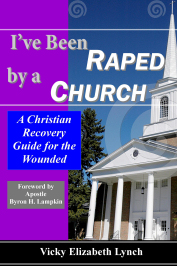
I have received some interesting and controversial comments about one of the new books that Conquest Publishers recently released. The book is entitled, “I’ve Been Raped by a Church: A Christian Recovery Guide for the Wounded.” The book chronicles author Vicky Lynch’s experiences with church pastoral abuse and gives biblical how-to advice to the reader about dealing with it.
The comments focused mostly on the title of the book (one person commented without even reading the book). The gist of the comments is that the use of the word “rape” in the title is troubling, especially since the book is not discussing sexual rape that takes place in church.
It is true that the commonly accepted meaning of the word “rape” is forcible sexual assault, an act that is violent, unwarranted, illegal, and causes physical and psychological harm. However, the spiritual and psychological damage that can occur with pastoral and church abuse is just as devastating as sexual rape, and gives credence to the use of the word “rape” as a metaphor for church abuse.
In some churches, the pastor or bishop is purported to be the representative of God in the life of that local assembly. The pastor may be just as vital to the local church as the pope is to the Catholic church. Church members often greatly honor, highly respect, and unequivocally trust their pastor. The pastor becomes heavily invested in the lives of his or her members, and vice versa. On matters of spiritual significance, the pastor becomes the final authority. The pastor becomes like a parent to them, and they like sons and daughters to the pastor. The pastor may not be God, but to local church members, he or she is about as close as you can get.
There are many church pastors who have this level of influence over their flock, and they use it with humility, govern in love, and seek only to bring their members into the potential that God has for them. But there are others who, unwittingly or not, use this influence to abuse and misuse their members. And because of the spiritual and psychological connection that exists between the pastor and church members, such abuse can —and often is—just as damaging as the spiritual and mental effects of sexual rape.
One can argue that an abused church member can always voluntarily leave the church, and thus avoid the abuse, while a rape victim does not have that choice. But abused church members often find it difficult to leave. Members that are heavily connected to their pastors often believe that God is speaking through them, and if they leave, they are dishonoring the pastor, and consequentially, dishonoring God. So, they will subject themselves to this dysfunctional relationship, believing that God will punish them if they sever the bond. For devout Christians who live each day to love and serve God, leaving the church and God’s representative is not an option. It is as if the pastor is holding a figurative gun to their heads and demanding that they stay, or else.
Therefore, as shocking and pointed as the word “rape” is, I believe the word is appropriate to describe the experience of a church member who has been subject to an unloving and abusive pastor and those who support that pastor. What do you think?